Current production

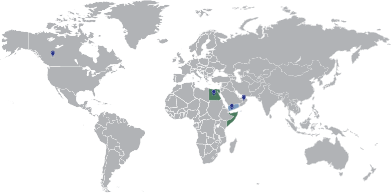
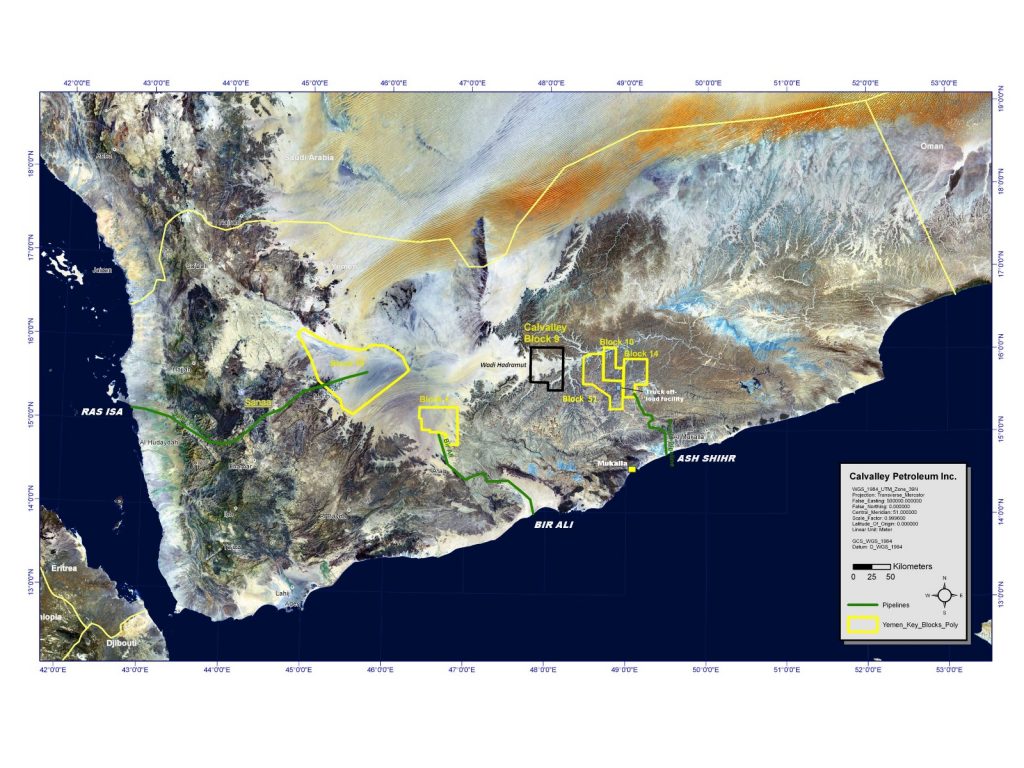
Our operations in Yemen

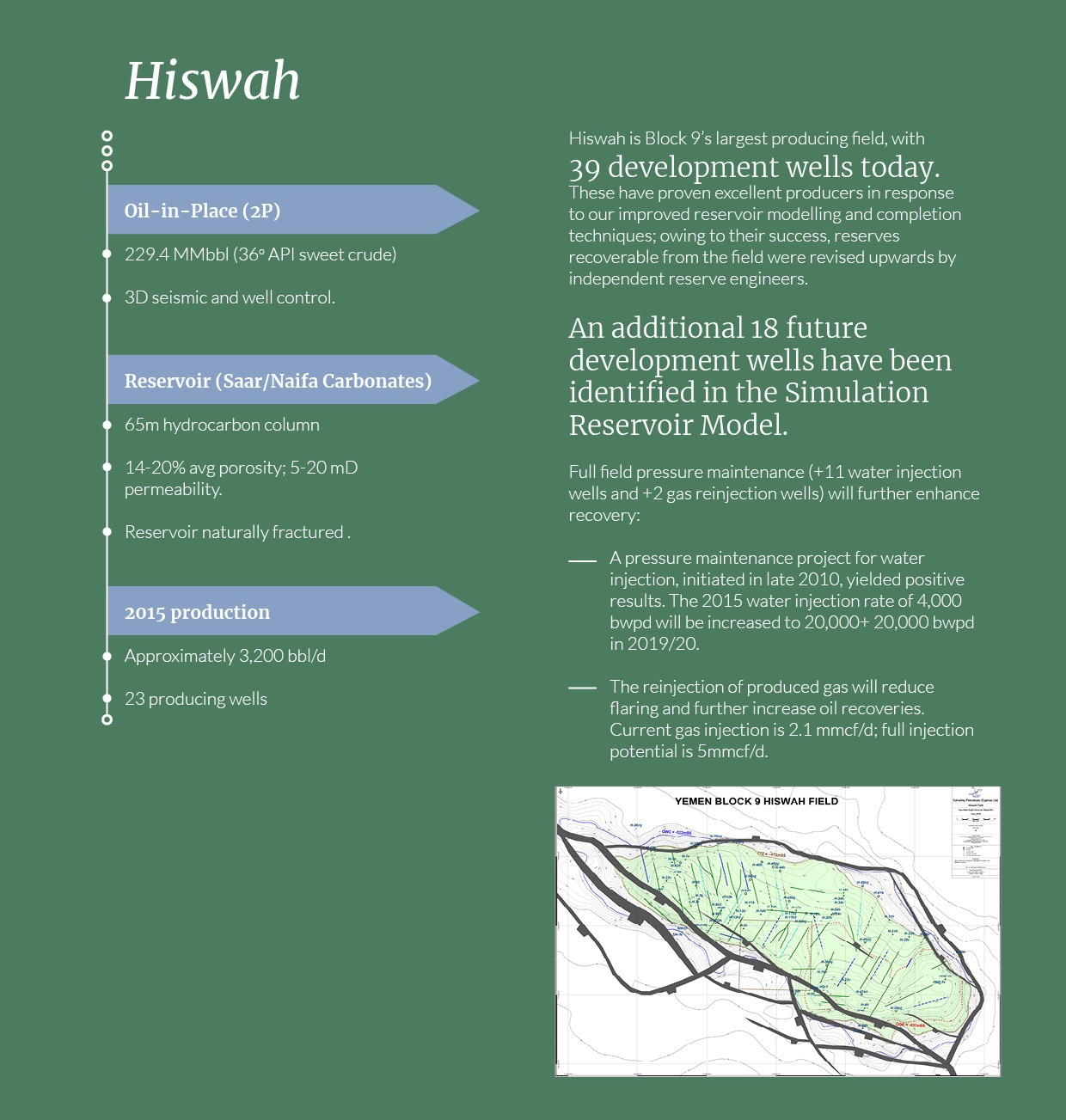
Calvalley has a consolidated working interest of 40 MMbbl proven reserves (McDaniel & Associates, 2014), driven primarily by our largest current area of operation, Block 9 in the Republic of Yemen, where our facilities became newly re-operative during 2019.

The journey to restarting production

In 2016, Calvalley’s Board of Directors approved institutional restructuring of Calvalley Cyprus Ltd. to bring in a consortium of new investors, Yung Holding.

In combination with the company’s strong local relationships, this has enabled the resumption of Yemen operations, even during this difficult time, through the financing of a work programme and budget of 35-45 million USD in surface and subsurface investments, which brought the facility back into operation in 2019, with 30 wells ready to produce.
Block 9, Republic of Yemen

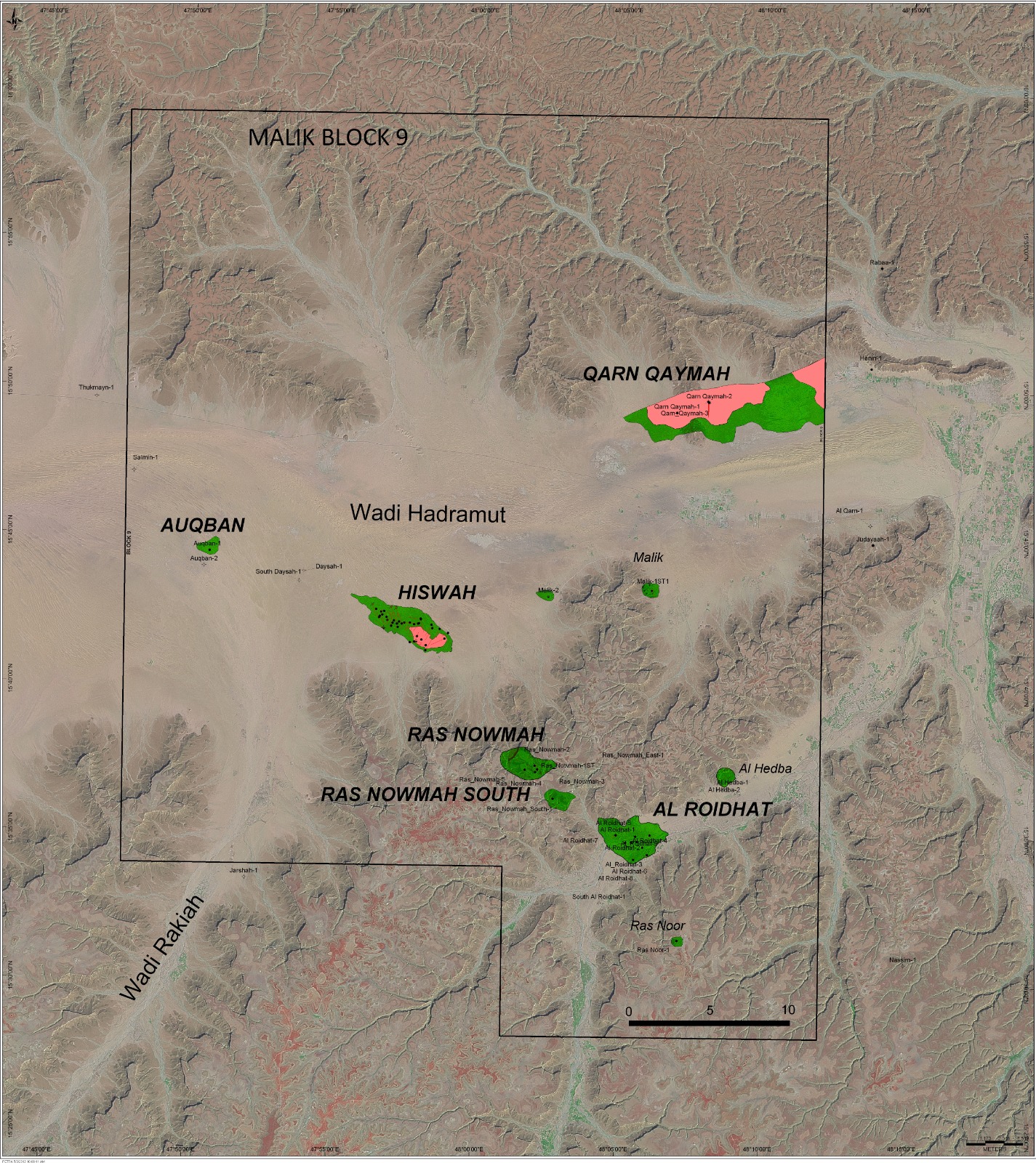
Calvalley’s fields in Block 9 are some of the highest-producing and most promising in the Republic of Yemen. Consdiering all exploration potential and contingent resources, according to McDaniels (2014), we estimate that as little as 3.7% of Calvalley’s total hydrocarbon potential has been extracted in the last 14 years, making Block 9 the most attractive asset in Yemen at the present time. 

This constitutes a tremendous opportunity and an exciting challenge. Calvalley’s technical expertise, strong investor commitment and local knowledge are vital to bring about successful results, and we are confident we are well-equipped to do so.

Block 9’s producing fields

Block 9 is located within the western margin of the Sayun-Masila Basin, a classic rift basin initiated by movement of basement blocks.

The main source rock in the area is reported to lie in the Madbi Formation (deposits of syn-rift marine carbonates and clastic sediments dating from the Kimmeridgian Age), with maturity sufficient to generate both oil and gas. Oil generation is likely to have started during the Late Cretaceous period and probably continues today

Block 9’s main reservoirs are located both above and below the Madbi Formation. Reserves totalling seven oil accumulations and one gas pool have been assigned to the block:
  • Qarn Qaymah (gas, condensate and oil) – contingent
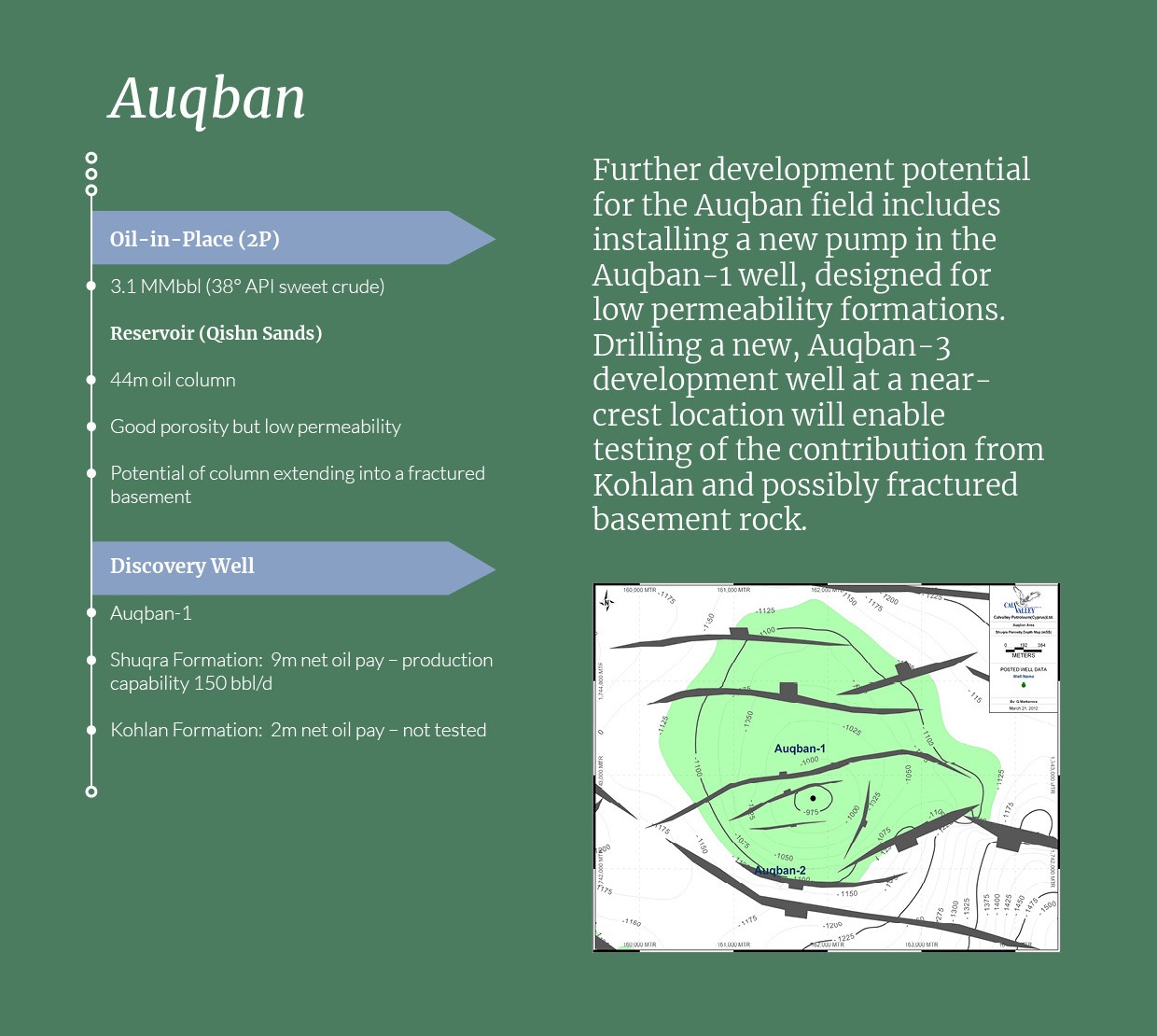
We are now operating all assigned reserves, comprising the above fields with 54 development wells. All pre-existing field facilities (wells, tanks, etc.) have been recently reconditioned and refurbished, with 30 wells ready to produce. Contingent resources include a number of appraisal wells and 41 exploration targets.
Facilities and technology in Block 9

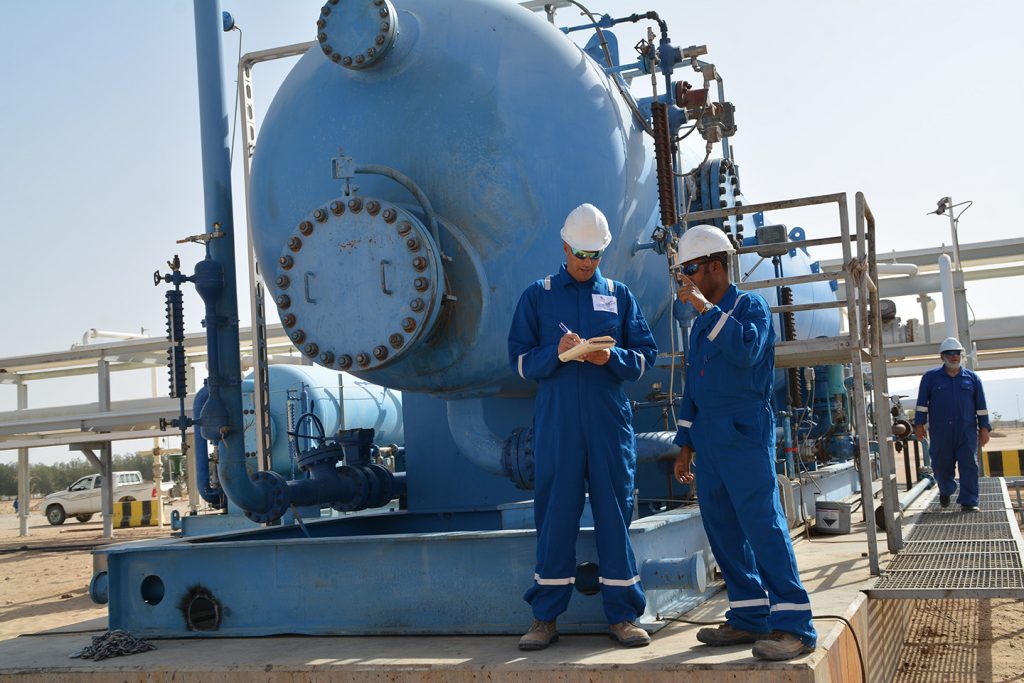
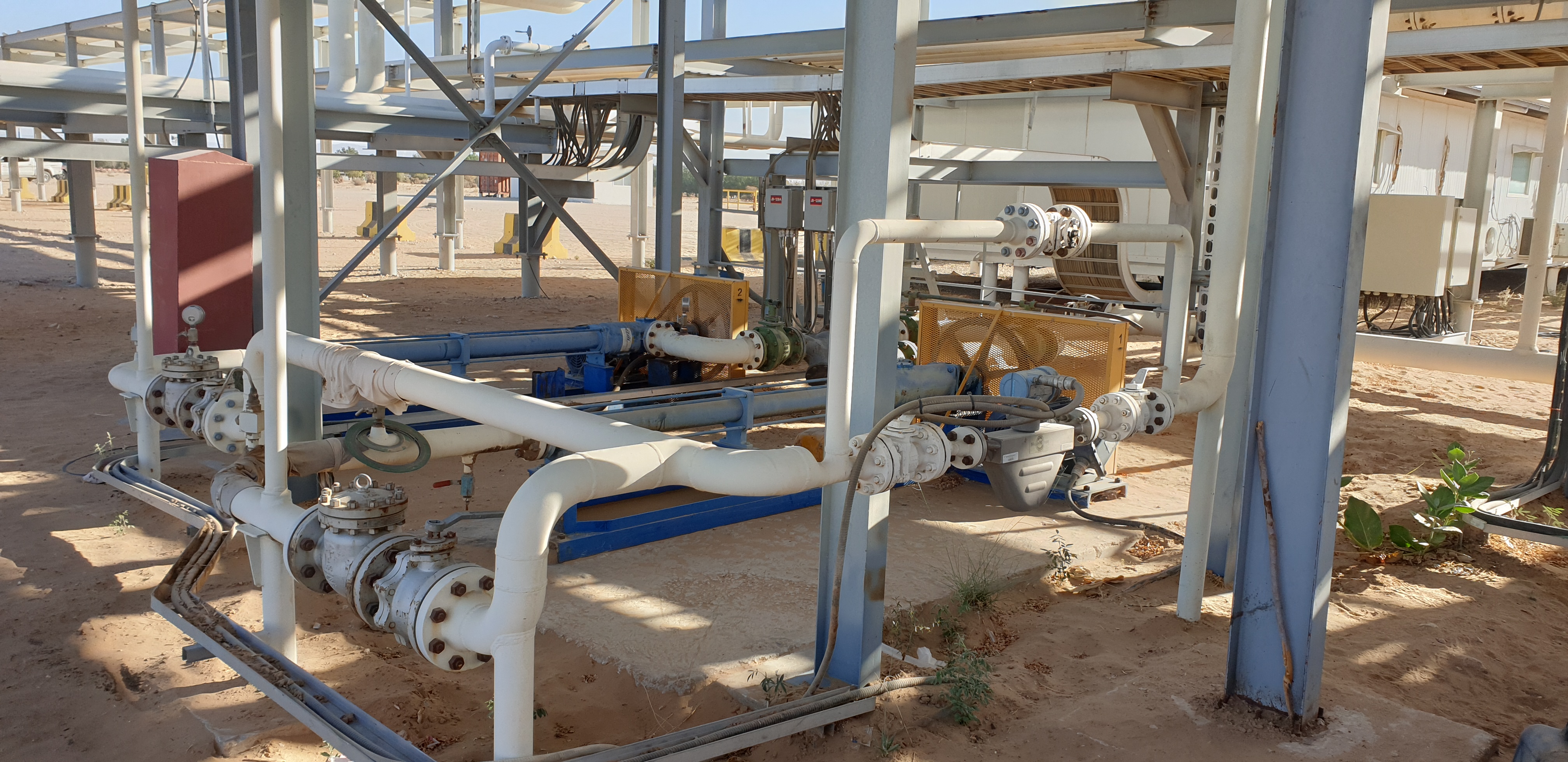
Our facilities in Block 9 are modern, clean and safe. Many areas have been freshly refurbished for the production re-start in 2019. All pre-existing field facilities (eg. wells and tanks) have been reconditioned and refurbished.

Central Processing Facility

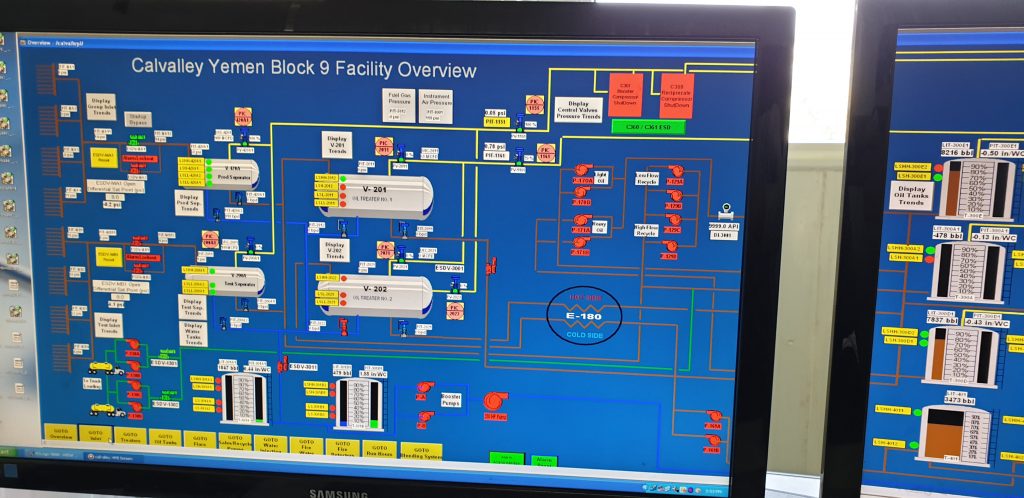
The facility at Block 9 is comprised of a gathering system that collects the produced well fluids from individual wells, and then transports them through a flow line to one of three satellite manifold systems.  

At the manifold system, the crude from the individual wells is then transported through the single trunk line, of greater diameter than the flow lines, to the Inlet of the main manifold of the Central Processing Facility. The produced well fluids are then separated at the three phase production separator into crude oil, produced water and associated gas. 

Crude Oil


The crude oil is washed with source water and treated through the Heater Treater, to further separate the emulsion from the crude and to ensure the salt content is reduced to a minimum. 

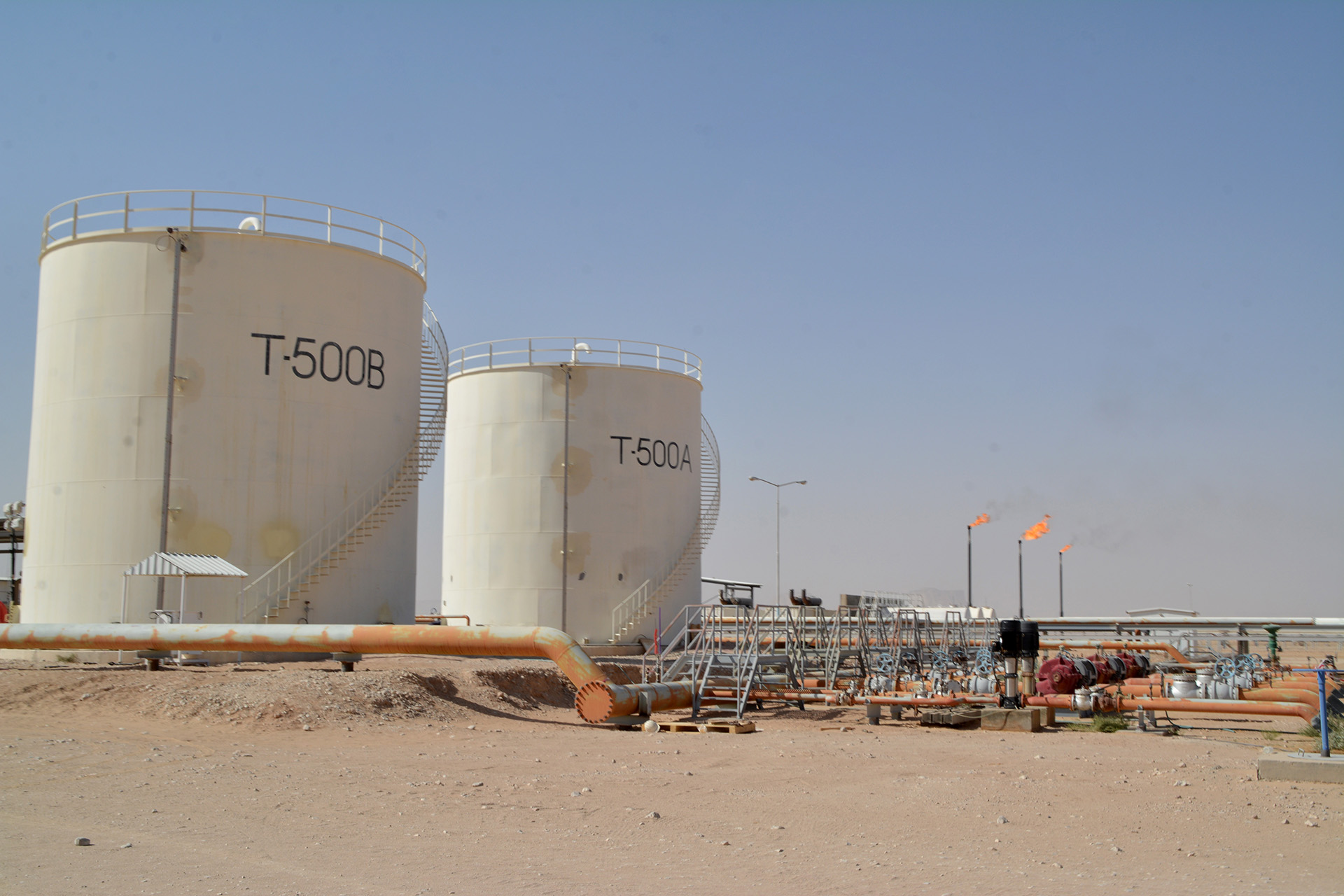
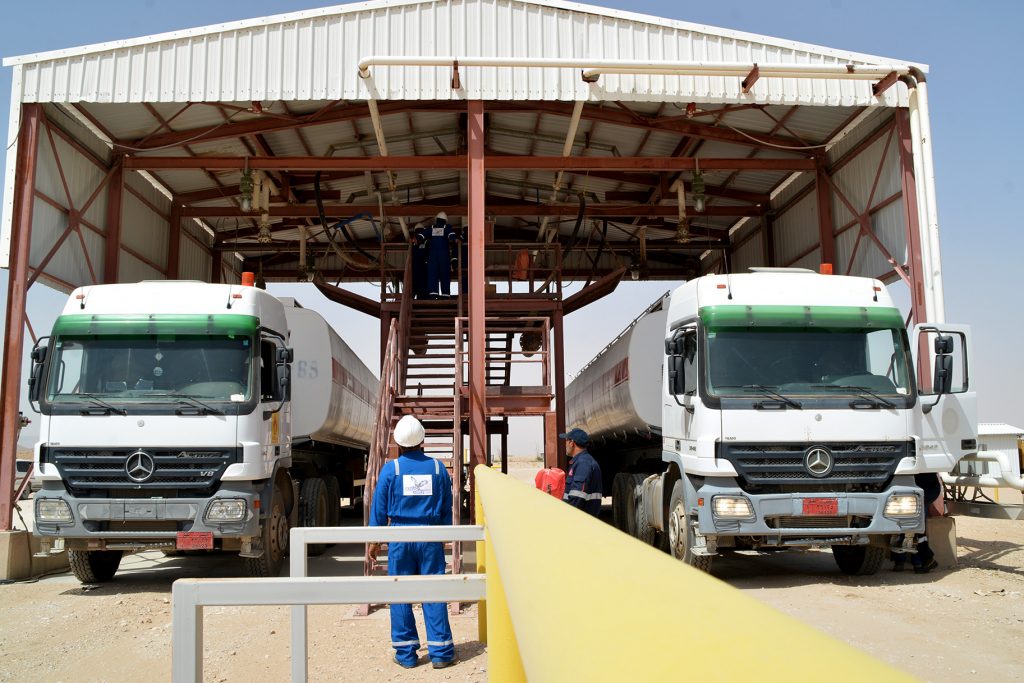
The crude is then delivered to the crude oil storage tank farm, compromising of six 10,000 BBL capacity tanks.  Shipment of crude oil from the Central Processing Facility is carried out by trucking where the crude is loaded on to the tankers from the sales crude oil tanks via the sales oil line, using the truck loading pumps.

Produced Water


The associated water from the separation vessel is delivered through the produced water line to the produced water tanks, comprising of two 5,000 BBL capacity tanks.  Following the settlement of the associated water in the first produced water tank, the associated water is cascaded to the other produced water tank, whilst the separated oil is skimmed back to the separation vessels for reprocessing, via the oil recovery pumps.  

At the water injection facility, the associated water comes from the produced water tanks and source water wells and is then treated through a two-stage filtration system, pressurized to a certain pressure, before re-injecting back into the water injectors for pressure maintenance of the reservoir.

Associated Gas

The associated gas is delivered from the separation vessel to the gas compression unit, where the gas pressure is raised to a pressure more than 1,000 psi through the four-stage compression unit. The gas is then re-injected back into the reservoir gas cap for pressure maintenance, through two gas injectors which are connected to the high pressure gas injection line.

Trucking In and Blending

 
Produced well fluids from the Ras Nowmah and Al Roidhat fields are delivered to two 5,000 BBL capacity truck-in tanks via the truck off-loading pumps. (Ras Nowmah and Al Roidhat fields crude has a different gravity compared to Hiswah field crude.) The crude is then processed through the dedicated Heater Treater and is delivered to a storage tank at the tank farm. 

The crude from Hiswah field categorized as ‘light crude blend stream’ is then blended with the processed crude coming from the other fields, which is categorized as ‘heavy crude blend stream’. 

Through the respective blending pump system, the two crude streams are mixed through a static mixer. The blended crudes’ density and water content is then measured, and, if meeting the export specification requirements, it is delivered to the sales oil tanks. If not, the crude is recycled back to the off-spec crude oil storage tank for reprocessing.

Technology

We have invested in state-of-the-art technology to optimise our future development plans and evaluation of assets. All surface processes are monitored using automated PLC (Programmable Logic Controller) systems which offer industry-standard reliability and flexibility at low costs.

Advanced industry software enables us swiftly and accurately to monitor inventory and movements in and out of the warehouse and to manage material and procurement pathways efficiently.

Employee Accommodation


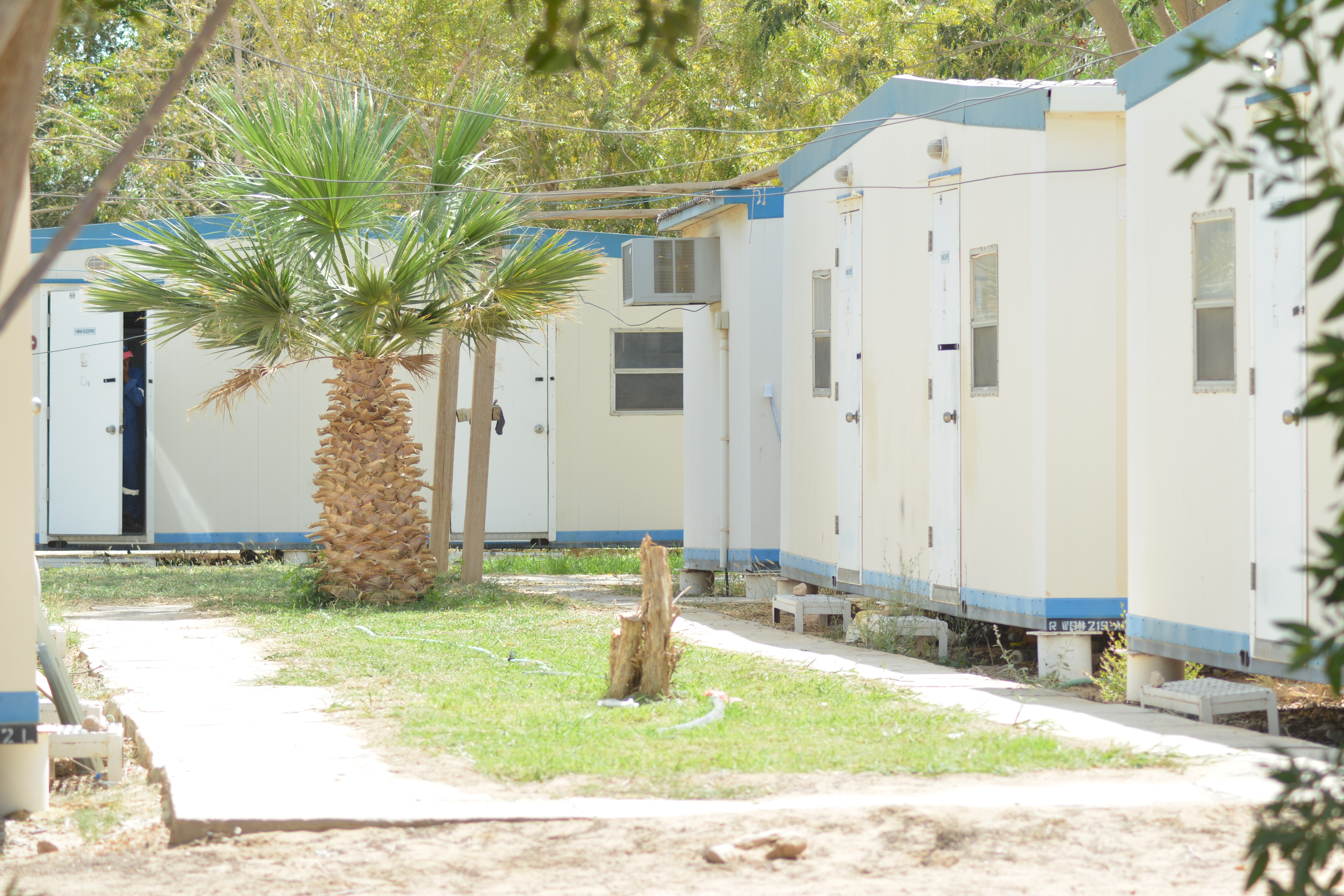
We have newly-installed, clean and safe accommodation for our site employees.